
-
Image

-
Image

-
Image

-
Image

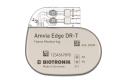

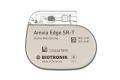
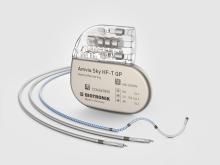
Amvia Edge DR-T/SR-T
Amvia Edge 起搏系统为您提供多种选择。利用更多的治疗方案选项,包括生理起搏和工具来应对房颤 (AF) 的发生。
作为首款获批准用于左束支区域起搏 (LBBAP)1 的起搏器,Amvia Edge 可促进患者自然心肌收缩模式的形成。它通过闭环刺激 (CLS) 提供生理心率,旨在通过心房 ATP (aATP) 维持窦性心律。
同时,Amvia Edge 能对植入、门诊随访、远程监测和 MRI 工作流程中的多项常规任务进行自动化。为您的患者提供独特的生理起搏,增强治疗效果,并让您从日常工作流程中解放出来,以便更多患者可以享受更个性化的护理。
产品亮点

实现生理起搏
Amvia Edge 是首款获批准用于左束支区域起搏 (LBBAP) 的起搏器。1 此外,Amvia Edge 独特的闭环刺激 (CLS) 传感器技术跟随自主神经系统,并自动 2 适应以模仿自然的内在调节功能。3

管理房性心律失常
Amvia Edge 旨在帮助患者随着时间的推移保持生理心率。它将门诊和远程心房监测功能与心房 ATP (aATP) 的心律失常管理工具相结合,以积极解决早期发生房颤 (AF) 的问题。14

简化护理路径
Amvia Edge 包括各种解决方案,可简化整个患者之旅的工作流程,包括从植入和随访到远程监测的过程,并具有出色的 MRI 兼容性。
媒体
通过 LBBAP 实现生理起搏
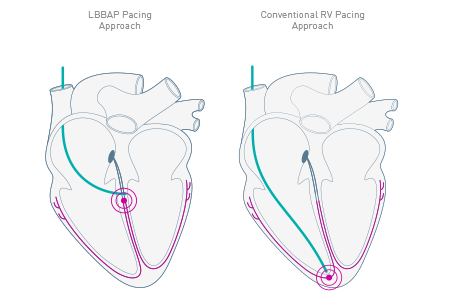
Amvia Edge 是首款获批准用于左束支区域起搏 (LBBAP) 的起搏器。1 与传统右室起搏相比,这种方法支持生理性心室激活,5 利用心脏传导系统的自然效率。 Amvia Edge 提供生理起搏,旨在帮助您降低患者发生起搏引起的心肌病及其严重后果的风险。
- LBBAP 可帮助您实现更自然的心肌收缩模式。4
- 使用经过验证的 Selectra 3D 专用植入工具支持 LBBAP 法,植入成功率 5 达 95%。

通过 CLS 满足患者的生理需求
Amvia Edge 独特的闭环刺激 (CLS) 传感器技术跟随自主神经系统,并自动适应 2 以模仿自然的内在调节功能。3 这包括检测情绪压力、身体压力或不涉及运动的身体活动。这样,Amvia Edge 可以提供逐次心搏生理心率适应——确保您的患者在需要时获得适当水平的刺激,并有助于提高生活质量。6,7,8
- 闭环刺激 (CLS) 是市场上唯一一种完全生理频率起搏反应。9
- 它通过每次心跳产生的阻抗变化来测量代谢需求,并自动适应。
- 与加速度计相比,患者在日常活动中的表现提高了 7%。10
- 与 DDDR 起搏相比,房性快速心律失常负荷降低了 45%11
- AT/AF 发生风险降低了 69%。12
- 相比仅使用加速度计起搏,三分之二的患者更喜欢 CLS。13

使用 aATP 管理房性心律失常
Amvia Edge 旨在帮助患者随着时间的推移保持生理心率。它将门诊和远程心房监测功能与心房 ATP (aATP) 的心律失常管理工具相结合,以积极解决早期发生房颤 (AF) 的问题。14 帮助您的患者维持窦性心律,从而保护他们免于进展为有症状的 AF,并保持他们的生活质量。
- aATP 针对检测到的稳定房性心律失常提供多种自动治疗,这可减轻心房负荷,从而有助于避免心房重塑和 AF 的进一步形成。15,16
- BIOTRONIK Home Monitoring® 可帮助您远程监测 AF 负荷并及早检测出 AF。14,17
配备 MRI Guard 24/7 的下一代 MRI 兼容性
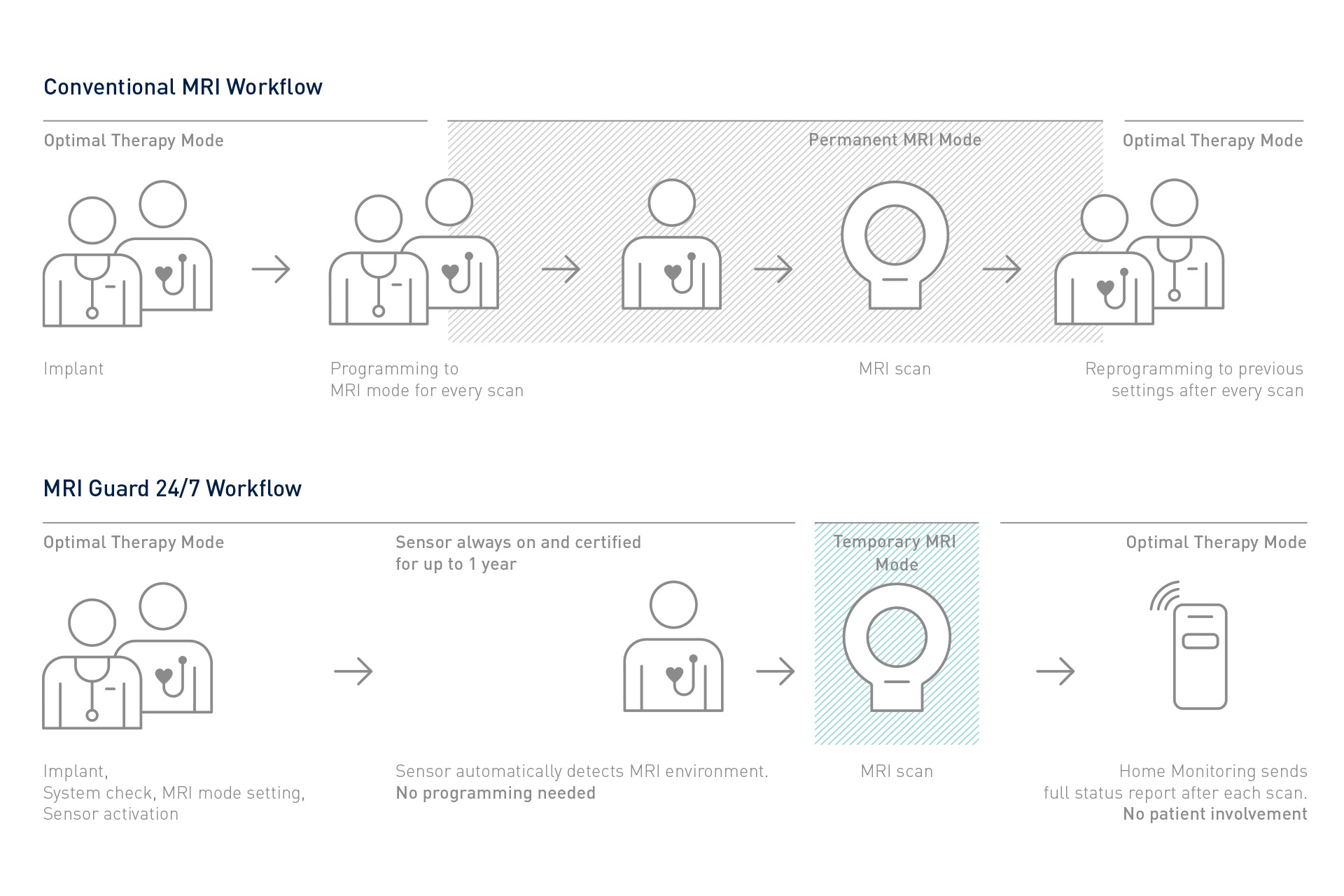
Amvia Edge 的 MRI Guard 24/7 提供自动 MRI 模式切换,可轻松进行 MRI 检查,无需扫描前和扫描后程控预约 18,19 ——为护理团队和患者实现简化和自动化操作。
- MRI 扫描前和扫描后程控可能需要最多 28 min20,这增加了患者、放射科工作人员和所需数量工作人员的等待时间。20 MRI Guard 24/7 专为节省此等待时间而设计。
- 该传感器可以在长达一年的完整随访间隔内处于活动状态,从而使患者能够在此期间的任何时间进行 MRI 扫描。
使用 BIOTRONIK Home Monitoring® 进行省时的远程监测
Amvia Edge 帮助您轻松提供以患者为中心的出色护理。它方便了患者的生活,14,21,22 减少了您的工作量,并可以为所有相关护理团队腾出时间。
- 传输成功率达 97%21——BIOTRONIK Home Monitoring® 的全自动设备配对功能可轻松实现“即插即用”设置,减少患者交互 22,并减少对技术故障排除的需求。
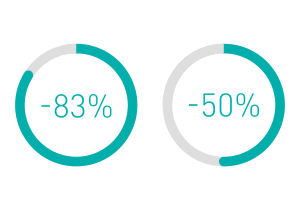
- 每个患者的门诊访视量减少了 83%,随访时间减少了 50%——让您可以腾出时间来关注更需要医疗护理的患者。23
- BIOTRONIK Home Monitoring® 展示出了 14,23 为护理团队和患者等节省时间和资源的潜力,它可以安全地将门诊随访时间从一年缩短到两年。 这也引起了 2021 年版 ESC 指南更新。
Amvia Edge 推出了独特的技术,用于出院前的早期远程随访和快速访问患者数据:

EarlyCheck 提供出院前早期远程随访功能,支持高效的工作流程,并有可能减少额外的等待时间。
24

QuickCheck 可让医生在随访时快速访问患者数据。在临床医生提出要求后,BIOTRONIK Home Monitoring® 数据通常会在几分钟内提供到位。25

超长的使用寿命和业界领先的保修期²⁶ ²⁷
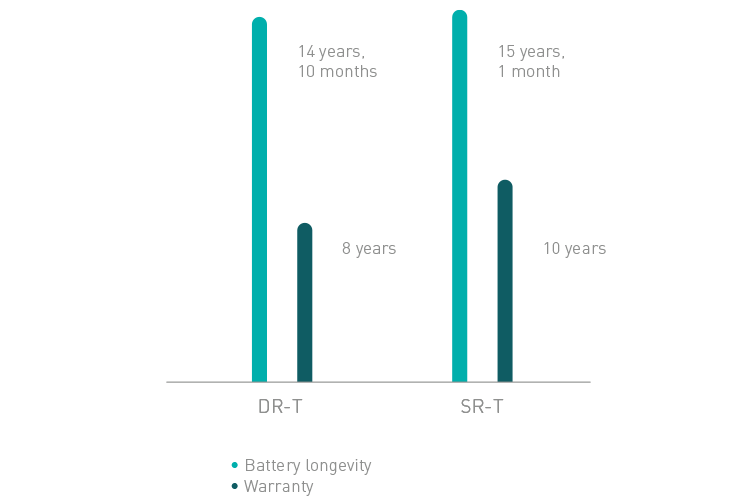
Amvia Edge 起搏器的使用寿命超过 15 年。28,29
同时,Amvia Edge DR-T/SR-T 拥有业界领先的保修计划,提供长达 10 年的全面保修。
26,27


下载 & 相关链接
相关产品
-
Image
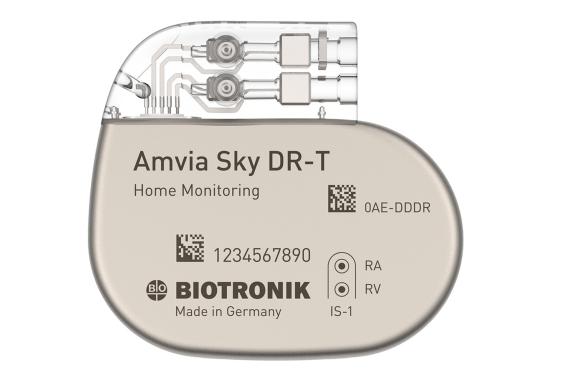 生理的选择。简化工作流程。
Amvia Sky DR-T/SR-T
Amvia Sky 起搏系统为您提供多种选择。利用更多的治疗方案选项,包括生理起搏和工具来应对房颤 (AF) 的发生。
作为首款获批准用于左束支区域起搏 (LBBAP)1 的起搏器,Amvia Sky...
-
Image
 外观小巧。治疗可靠。
Enticos 4 DR/D/SR/S
Enticos 4 起搏器外观小巧、功能完备,集全面的强大的心动过缓治疗功能以及简便的操控性于一身,从而成为工作持久的无线设备。
-
Image
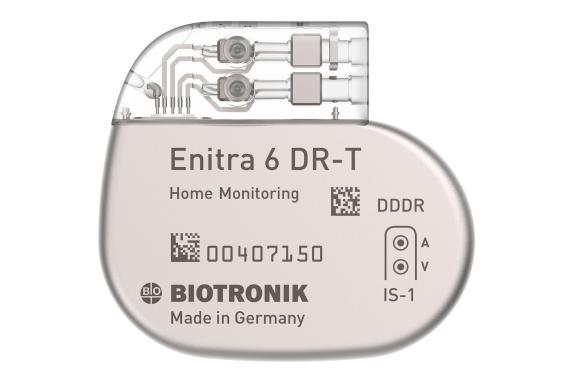 外观小巧。经过验证的解决方案
Enitra 6 DR-T/SR-T
Enitra 6 起搏器外观小巧、功能完备,集全面的诊断、强大的心动过缓治疗功能以及简便的操控性于一身——从而成为工作持久的无线设备,支持高效 MRI 兼容,远程监测节省时间。
-
Image
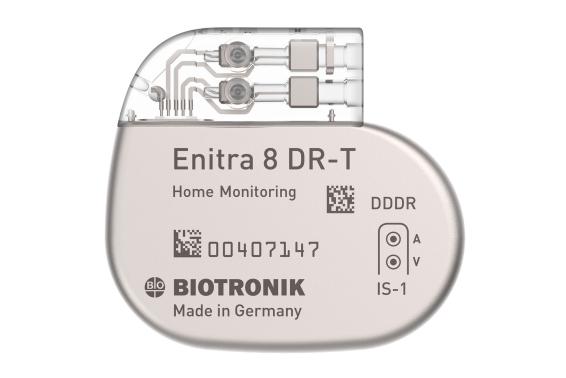 外观小巧。选择众多。
Enitra 8 DR-T/SR-T
小巧、耐用、完备、智能——Enitra 8 起搏器外观小巧、功能完备,集全面的诊断、强大的心动过缓治疗功能以及简便的操控性于一身——从而成为工作持久的无线设备,支持高效 MRI 兼容,远程监测节省时间...
-
Image
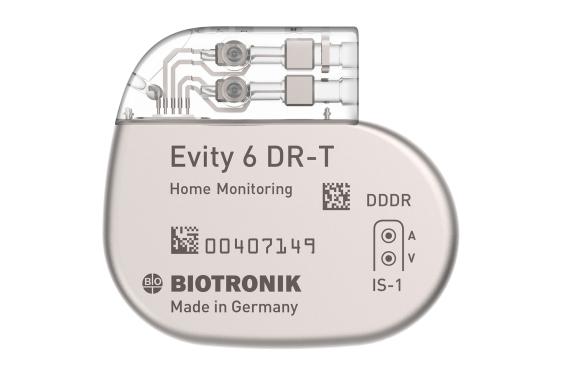 外观小巧。经过验证的解决方案。
Evity 6 DR-T/SR-T
Evity 6 起搏器外观小巧、功能完备,集全面的诊断、强大的心动过缓治疗功能以及简便的操控性于一身——从而成为工作持久的无线设备,支持高效 MRI 兼容,远程监测节省时间。
-
Image
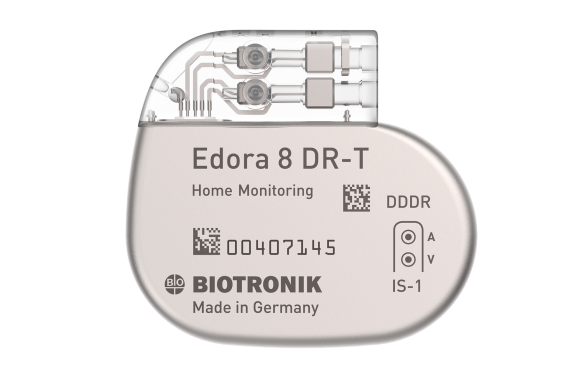 外观小巧。选择众多。
Edora 8 DR-T/SR-T
小巧、耐用、完备、智能——Edora 8 起搏器外观小巧、功能完备,集全面的诊断、强大的心动过缓治疗功能以及简便的操控性于一身——从而成为工作持久的无线设备,支持高效 MRI 兼容,远程监测节省时间...
联系我们
参考文献
1) 百多力 Amvia Edge 技术手册、美敦力 Azure XT DR MRI SureScan™ 手册;波士顿科学 Accolade MRI™ 技术手册;Abbott Assurity MRI™ 用户手册;MicroPort Alizea™ 植入设备手册。2) Lindovska M, Kameník L, Pollock B, et al. Clinical observations with Closed Loop Stimulation pacemakers in a large patient cohort: the CYLOS routine documentation registry (RECORD). Europace.2012; 14: 1587–1595. 3) Santini M, Ricci R, Pignalberi C, et al. Effect of autonomic stressors on rate control in pacemakers using ventricular impedance signal. Pacing Clin Electrophysiol. 2004; 27: 24-32. 4) Sharma PS, Patel NR, Ravi V, et al. Clinical outcomes of left bundle branch area pacing compared to right ventricular pacing: Results from the Geisinger-Rush Conduction System Pacing Registry. Heart Rhythm. 2022; 19(1): 3-11. 5) De Pooter J, Ozpak E, Calle S, et al. Initial experience of left bundle branch area pacing using stylet-driven pacing leads: A multicenter study. J Cardiovasc Electrophysiol. 2022; 33(7): 1540-1549. 免责声明:本材料仅总结了 De Pooter 等人在他们的临床研究中对传导系统起搏 (CSP) 工具的试验性使用。请注意,Solia S 电极导线尚未获批准用于 CSP。百多力CSP工具目前在美国尚未获批用于传导系统起搏。本内容不适用于美国医疗保健机构。6) Menezes AS, Daher MT, Nascente CM, Moreira HG, Moreira TAC, and Campos RN. Correlation among Closed Loop Stimulation, cardiopulmonary capacity, and quality of life PBMR. 2003; 8(2): 119-124. 7) Pavri BB and Russel S. An impedance sensor is superior to an accelerometer for chronotropically incompetent patients with sinus node dysfunction: results of a pilot study with a dual sensor pacemaker. Circulation. 2006; 114: II_749. 8) Coenen M, Malinowski K, Spitzer W, et al. Closed Loop Stimulation and accelerometer based rate adaptation: results of the PROVIDE study, Europace. 2008; 10: 327-333. 10) Malinowski K. Interindividual comparison of different sensor principles for rate adaptive pacing PACE. 1998; 21(PT II): 2209-2213. 10) Abi-Samra FM, Singh N, Rosin BL, DwyerJV, and Miller C. Europace. 2013; 15: 849-856. 11) Puglisi A, Favale S, Scipione P, et al. Overdrive versus conventional closed-loop rate modulation pacing in the prevention of atrial tachyarrhythmias in brady-tachy syndrome: on behalf of the Burden II study group. Pacing Clin Electrophysiol. 2008; 11: 1443-55. 12) Ikeda S, Nogami A, Inoue K, et al. Closed‐loop stimulation as a physiological rate‐modulated pacing approach based on intracardiac impedance to lower the atrial tachyarrhythmia burden in patients with sinus node dysfunction and atrial fibrillation. J Cardiovasc Electrophysiol. 2020; 31: 1187-1194. 13) Coenen M, Malinowski K, Spitz W, et al. Closed loop stimulation and accelerometer-based rate adaptation: results of the PROVIDE study. Europace. 2008; 10: 327-333. 14) Mabo P, Victor F, Bazin P, et al. A randomized trial of long-term remote monitoring of pacemaker recipients (the COMPAS trial). Eur Heart J. 2012; 33(9): 1105-1111. 15) Nattel S, Burstein B, Dobrev D. Atrial remodeling and atrial fibrillation: mechanisms and implications. Circ Arrhythm Electrophysiol. 2008; 1(1): 62-73. 16) 存档数据。 17) Varma N, Epstein AE, Irimpen A, et al. Efficacy and safety of automatic remote monitoring for implantable cardioverter-defibrillator follow-up: the Lumos-T Safely Reduces Routine Office Device Follow-up (TRUST) trial. Circulation. 2010; 122(4): 325-332. 18) Mullane S, Michaelis K, Henrickson C, et al. Utilization and programming of an automatic MRI recognition feature for cardiac rhythm management devices. Heart Rhythm O2. 2021; 2: 132–137. 19).存档数据。 20) Siddamsetti S, Shinn A, Gautam S. Remote programming of cardiac implantable electronic devices: a novel approach to program cardiac devices for magnetic resonance imaging. J Cardiovasc Electrophysiol. 2022;33(5):1005–1009. 21) Watanabe E, Yamazaki F, Goto T, et al. Remote management of pacemaker patients with biennial in-clinic evaluation: continuous Home Monitoring in the Japanese At-Home study: A randomized clinical trial. Circ Arrhythm Electrophysiol. 2020 May;13(5):e007734. doi: 10.1161/CIRCEP.119.007734. 22) Garcia-Fernández FJ, Asensi JO, Romero R, et al. Safety and efficiency of a common and simplified protocol for pacemaker and defibrillator surveillance based on remote monitoring only: a long-term randomized trial (RM-ALONE). Eur Heart J. 2019; 40(23): 1837–1846. 23) Ricci RP, Morichelli L, Quarta L, et al. Long-term patient acceptance of and satisfaction with implanted device remote monitoring, Europace. 2010; 12(5): 674-679.24) 存档数据。25) 存档数据。26) Amvia Edge SR-T 10 年;百多力心脏植入电子设备的有限保修;美敦力有限保修概要;波士顿科学公司有限保修信息和表格;Abbott CRM 保修程序参考手册;MicroPort Alizea DR™/Alizea SR™ 种植体手册。27) Amvia Edge DR-T 8 年;百多力心脏植入电子设备的有限保修;美敦力有限保修概要;波士顿科学公司有限保修信息和表格;Abbott CRM 保修程序参考手册;MicroPort Alizea DR™/Alizea SR™ 种植体手册。 28) Amvia Edge SR-T: 2.5 V/0.4 ms、60 bpm、500 Ω;起搏:50 %,家庭监测:关闭,QuickCheck:关闭,RF-Telemetry:关闭。 29) Amvia Edge DR-T: A: 2.5V/0.4ms,60 bpm,500 Ω,起搏:50%, RV: 2.5V/0.4ms,60 bpm,500 Ω,起搏:5%,家庭监测关闭,QuickCheck:关闭,RF-Telemetry:关闭,心室起搏抑制:打开。